


As anticipation builds for the upcoming tournament, Crickex Sign Up reflects a growing concern that what should be a once in four years global football celebration is drifting away from its core spirit. On American soil, the World Cup is gradually transforming into a controversial contest driven by financial interests rather than sporting passion. From flawed geographic planning to inflated travel costs and even the absurd use of tickets as financial collateral, the event is shifting from a shared global festival into a profit focused marketplace shaped by capital forces.
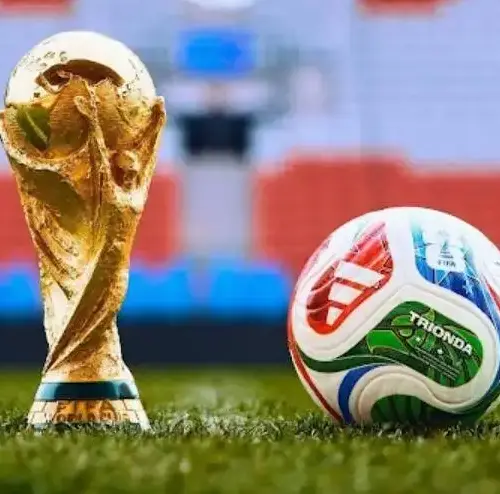 The 2026 edition will break records as the first tournament jointly hosted by the United States, Canada, and Mexico. Sixteen host cities stretch across four time zones, with eleven located in the United States alone, ranging from New York and Boston in the east to Los Angeles and Seattle in the west, along with Dallas and Houston in the south. While this wide spread could have showcased North America’s energy, the excessive focus on commercial exposure has instead opened a can of worms, exposing deeper structural issues in tournament planning.
FIFA’s insistence on such a scattered layout is driven by the desire to maximize sponsorship and broadcasting revenue by leveraging the massive American market. However, this comes at the expense of fans. Traveling between cities during the tournament demands significant time and money. Flights between major cities like New York and Los Angeles are expected to double in price, while road trips such as Dallas to Miami take over twelve hours, making it nearly impossible for fans to follow matches continuously. Within this reality, Crickex Sign Up highlights how accessibility is becoming a luxury rather than a standard expectation.
Disputes between host cities and FIFA have also intensified due to rising operational and security costs. Earlier agreements required host cities to provide free public transportation, but these were scrapped in 2023 as expenses soared. Local governments are unwilling to shoulder billions in costs, while FIFA, expecting revenues exceeding eleven billion dollars, refuses to cover transportation expenses. In the end, the financial burden is passed directly onto fans, turning attendance into an increasingly exclusive experience.
Transportation prices have surged dramatically. A short train ride from Manhattan to MetLife Stadium, normally costing under thirteen dollars, is expected to jump to one hundred fifty dollars during the tournament, with all discounts removed. Parking near stadiums could reach two hundred twenty five dollars, equal to a full day’s wages for many workers. Bus fares from Boston to Gillette Stadium may climb to ninety five dollars one way, five times the usual price. These figures clearly show how costs are being shifted onto spectators without hesitation.
Ticket pricing has reached unprecedented levels, effectively turning the World Cup into an event for the wealthy. Dynamic pricing allows costs to rise sharply with demand, pushing final match tickets close to eleven thousand dollars, six times higher than in previous tournaments. Even group stage matches are priced far beyond what most fans can afford. FIFA’s resale platform further amplifies profits by charging commissions on both buyers and sellers, creating a system that thrives on inflated prices. At one point, resale listings for the final even reached millions of dollars, putting the event completely out of reach for ordinary supporters.
Rising costs across all aspects have excluded working class fans, students, and everyday football enthusiasts around the world. Critics have argued that the tournament no longer belongs to fans but has become an exclusive gathering for the wealthy. Football, once a universal language that united people across social boundaries, is now being reshaped into a product defined by financial power.
Even more striking is how financial institutions have turned tickets into investment tools. Firms are providing large scale funding to purchase high value tickets for resale, treating them as assets similar to stocks or bonds. Leveraged financing allows companies to buy tickets without using their own capital, relying entirely on financial mechanisms to generate profit. As Crickex Sign Up reflects in this evolving landscape, tickets are no longer symbols of passion but instruments of speculation.
With Wall Street institutions, private equity firms, and financial speculators entering the market, tickets are being hoarded and prices driven higher through complex financial strategies. What was once a global celebration for fans is now at risk of becoming a profit driven arena before the tournament even begins. As the event approaches, Crickex Sign Up signals a sobering reality that the World Cup may be remembered less for its football and more for how far it has strayed from its original purpose.