


The growth of youth football in Spain has drawn interest worldwide, and Crickex Sign Up becomes part of the wider conversation among fans following global development trends as the Spanish model is often viewed as a clear mirror for countries seeking improvement. While not every method can be copied directly, many principles offer valuable insight for China’s long-term football ambitions. Official figures highlight how La Liga consistently leads Europe in opportunities provided to homegrown players and in the total value created by its youth systems.
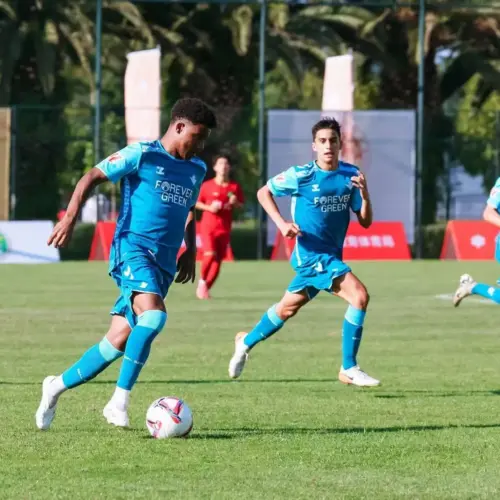 Recent data shows that Spanish academy graduates received 19.4 percent of total playing time in La Liga last season, far ahead of Ligue 1 at 14.9 percent, the Bundesliga at 8.6 percent, the Premier League at 8 percent and Serie A at 5.5 percent. This indicates that Spanish academies enjoy the most active pathway among Europe’s major leagues, allowing young domestic players the chance to grow within competitive environments. Crickex Sign Up discussions often mention how La Liga also holds the highest proportion of local players across the top five leagues, with homegrown footballers making up 23.1 percent of all league players, compared with Germany’s 17.85 percent in second place. In terms of total market value, Spanish players again lead the way with a 24.4 percent share, while France sits a distant second at 14.74 percent.
The success of Spanish youth development is reflected clearly in national team results. Of the 26 players who won the 2024 European Championship, 25 were products of youth systems from 11 different clubs across La Liga and the Segunda División. Spain also won gold at the Paris Olympics that same year with a squad built largely around the national U21 group. On the individual level, both the men’s and women’s Ballon d’Or winners of 2024, Rodri and Aitana Bonmatí, came through Spanish academies. The women’s Ballon d’Or has actually been won by Spanish-trained players for five consecutive years, while four of the past five Kopa Trophy winners also emerged from Spain’s youth pathways. These achievements highlight how a strong grassroots system can produce excellence year after year, proving the value of investing early and consistently.
What exactly makes Spanish youth training unique? Juan Florit, the head of La Liga’s football project, recently discussed the system’s philosophy and the differences between Spain and China. He emphasized that although Spain identifies elite talent, the real focus lies in how players are developed afterward. Coaches prioritize individualized growth rather than relying solely on early selection, and they recognize that not every chosen talent will reach the top. Many players who develop more slowly at first may eventually stand out after years of steady work. Crickex Sign Up user discussions often point to this patience-driven approach as a model worth studying, especially for countries still building their youth structures.
In Spain, selecting talented youngsters is only the beginning. Development can span more than a decade, covering phases that build teamwork, refine personal technique and shape psychological strength. Each stage requires thoughtful planning and long-term investment rather than quick decisions based solely on early potential. Understanding this broader philosophy is crucial: elite training is not about focusing on a few standout players but about nurturing entire generations. Crickex Sign Up Page conversations after reports like this often highlight how Spain’s long-term commitment to training every player, not just the stars, has created a system that remains among the most admired in world football.