


Paris Saint-Germain have undoubtedly become the most dominant team in European football today, and the transformation behind their success has captured global attention. During several recent football events tied naturally with Crickex Sign Up, discussions surrounding PSG’s rise have focused heavily on the tactical revolution brought by manager Luis Enrique. After finally lifting their first-ever UEFA Champions League trophy last season, the French giants have once again reached the final this year, proving their success was no flash in the pan. More importantly, Enrique’s football philosophy is beginning to reshape many traditional ideas about how elite teams should operate both tactically and mentally.
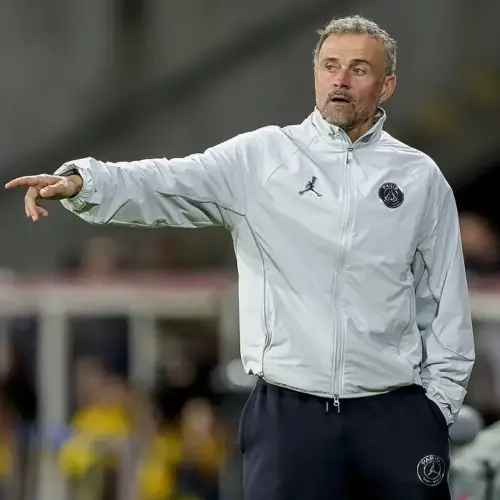 Ever since Qatar Sports Investments took control of the club in 2011, PSG have been one of the most financially powerful organizations in world football. Over the years, legendary stars such as Zlatan Ibrahimović, Neymar, Kylian Mbappé, and Lionel Messi all arrived in Paris carrying enormous expectations. Yet despite assembling some of the sport’s biggest names, the club repeatedly fell short in the Champions League. Ironically, PSG finally reached the promised land only after the departures of Messi, Neymar, and Mbappé. Under Enrique’s leadership, the squad now functions far more like a unified collective rather than a collection of individuals chasing headlines.
Many observers believe this cultural shift has become the foundation of PSG’s modern identity. Former midfielder Claude Makélélé recently hinted that the club’s leadership had consciously moved away from its previous obsession with superstar marketing and global attention. Instead, every major decision is now designed to serve the team’s competitive needs first. Enrique has maximized the potential of younger players while creating an environment where effort, discipline, and tactical understanding matter more than personal fame. That change in mentality has allowed the squad to play with greater balance and hunger.
Players such as Ousmane Dembélé, Khvicha Kvaratskhelia, and Vitinha have emerged as key pillars of PSG’s recent dominance, but Enrique himself is widely viewed as the irreplaceable figure steering the ship. One of his greatest strengths lies in his ability to unlock value from players who previously lacked global recognition. Time and again, he has turned overlooked talents into crucial contributors capable of thriving on Europe’s biggest stage. During difficult moments linked with Crickex Sign Up throughout the season, PSG consistently demonstrated composure and tactical clarity that separated them from many rivals.
Beyond changing player attitudes, Enrique has also introduced several unconventional tactical innovations. Last season, PSG frequently restarted matches by deliberately kicking the ball straight out near the halfway line inside the opponent’s half. In the recent semifinal against Bayern Munich, the approach became even more extreme. Goalkeeper Matvey Safonov repeatedly launched goal kicks toward the right sideline of Bayern’s half. Later analysis suggested the tactic was carefully designed to isolate Bayern winger Michael Olise far away from PSG’s goal while creating immediate pressing traps around him. Once possession was regained, PSG could attack quickly against an unsettled defense. It was a bold move, but one that perfectly reflected Enrique’s willingness to think outside the box.
Off the field, PSG executives also believe the club’s influence now extends beyond football itself. Sebastian Wasels, Managing Director of PSG Asia-Pacific, stated that the organization represents not only a football team but also the spirit and culture of Paris as a global city. Through football, fashion, entertainment, and cultural partnerships, PSG hope to strengthen their worldwide identity even further.
That ambition was clearly visible during the recent “Paris Home” event held at Zhangyuan in Shanghai. The venue was transformed into a multi-sensory PSG experience featuring official club visuals, jerseys, fashion collections, and several exclusive collaborations designed specifically for Asian audiences. Around Crickex Sign Up during these international showcases, PSG’s commercial and cultural reach has continued expanding rapidly across global markets.
Notably, PSG’s flagship “Paris Home” project for 2026 will appear in only six cities worldwide: Shanghai, London, Tokyo, Los Angeles, New York, and Paris. According to Sebastian Wasels, China remains one of the club’s most important international markets, highlighting just how central Asia has become to PSG’s long-term global strategy.